Today, when people want to learn about a business, product, or service, one of the first things they do is search online. They look for information, compare different options, read about services, check contact details, and try to understand whether a business can be trusted.
This is where a website becomes one of the most important digital assets for a business.
Whether you run a small local shop, hotel, restaurant, consultancy, healthcare business, startup, educational institute, real estate company, or growing brand, a professionally designed website gives your business a place where customers can discover and understand you online.
But what exactly is a website, and why does your business need one?
Let’s understand it in simple terms.
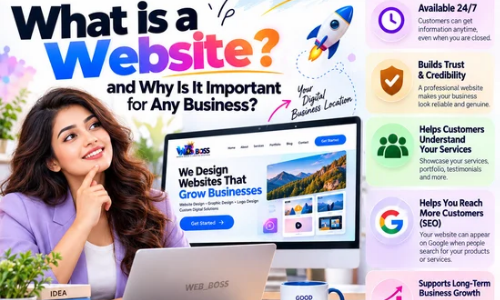
What Is a Website?
A website is a collection of interconnected web pages available online under a particular domain name.
For example, a typical business website may include:
- Home page
- About Us page
- Services or Products pages
- Portfolio or Gallery
- Blog
- Testimonials
- Frequently Asked Questions
- Contact page
Think of a website as your digital business location.
A physical office or shop represents your business offline. In a similar way, your website represents your business online.
It tells potential customers who you are, what you offer, how your products or services can help them, and how they can contact you.
Why Is a Website Important for a Business?
Having a website is no longer limited to large companies. Small businesses, freelancers, professionals, startups, and local service providers can also benefit significantly from building a strong online presence.
Here are some of the biggest reasons why.
1. Your Website Creates Your Digital Identity
Before contacting a business, many potential customers search for it online.
When they find a professionally designed website containing clear information about your company, services, location, and contact details, it becomes easier for them to understand your business.
Your website can become the central point of your digital identity.
Your social media profiles, Google Business Profile, advertisements, emails, and other marketing channels can all direct potential customers to your website for more information.
2. Your Business Can Be Discovered 24/7
A physical office has opening and closing hours.
A website does not.
Customers can visit your website at any time to explore your services, read about your company, view your portfolio, check frequently asked questions, or send an enquiry.
Even when your office is closed, your website can continue providing useful information about your business.
In this sense, a well-designed website works like a 24/7 digital representative for your brand.
3. A Professional Website Helps Build Credibility
Imagine discovering two businesses offering similar services.
One has a professional website with clear service information, genuine business details, testimonials, previous work, and easy contact options.
The other has almost no online information.
Which business would be easier to research?
A professional website gives potential customers more information to evaluate your business before making contact.
Elements such as these can strengthen credibility:
About Us information
Explain who you are and the experience behind your business.
Portfolio or previous work
Show customers what you have already created or delivered.
Testimonials and reviews
Provide evidence of previous customer experiences.
Business contact information
Make it easy for visitors to reach you.
Professional design
Create a consistent and polished brand experience.
4. A Website Helps Customers Understand Your Services
Customers shouldn’t have to call you simply to understand what you offer.
A properly structured website can explain each service separately.
For example, a web design company might have dedicated pages for:
- Business Website Design
- E-commerce Website Development
- Landing Page Design
- WordPress Development
- Graphic Design
- Logo Design
- Website Redesign
- Website Maintenance
Each page can explain what the service includes, who it is suitable for, and how customers can enquire.
This helps visitors find relevant information before contacting the business.
5. A Website Can Help You Reach Customers Through Google
A website can also become an important part of your Search Engine Optimization (SEO) strategy.
SEO is the process of improving a website so search engines can better understand its content and potentially display relevant pages when people search for related information, products, or services.
For example, people may search for phrases such as:
“website designer near me”
“website design company”
“professional website designer”
“ecommerce website development”
“graphic design services”
A properly optimized website gives a business opportunities to appear for relevant searches.
SEO does not guarantee a particular Google ranking, but a technically sound website with useful content provides the foundation needed to build organic search visibility.
6. Your Website Gives You More Control Over Your Brand
Social media is valuable, but your social media profile exists on another company’s platform.
Your website gives you significantly more control over how your business is presented.
You can decide:
- Your brand colors
- Website layout
- Typography
- Images
- Service presentation
- Calls to action
- Portfolio
- Contact forms
- Landing pages
- Blog content
Instead of fitting your business into a standard social-media profile, you can create an online experience specifically around your brand.
Social Media vs Website: Do You Need Both?
A common question from small businesses is:
“I already have Instagram or Facebook. Do I still need a website?”
Social media and websites serve different purposes.
Social media is excellent for communicating with audiences, publishing regular content, showcasing work, and building a community.
A website is better suited to organizing detailed information about your business, services, portfolio, company, FAQs, and contact options in one professional location.
Rather than choosing one over the other, businesses can use them together.
Social Media → Creates attention and engagement
Website → Provides detailed information and supports enquiries
Together, they can create a stronger digital presence.
7. A Website Can Generate Business Enquiries
A website should do more than look attractive.
It should make the next step clear.
Depending on the business, you can include:
- Call buttons
- WhatsApp buttons
- Contact forms
- Request-a-quote forms
- Appointment booking
- Product enquiry forms
- Newsletter signup
- Consultation booking
This turns the website from a simple online brochure into a useful business tool.
8. A Website Helps Showcase Your Work
For creative professionals and service businesses, showing previous work can be extremely important.
A website portfolio can display:
- Website projects
- Logo designs
- Graphic designs
- Branding projects
- Case studies
- Before-and-after work
- Client testimonials
Instead of explaining your abilities only through words, you can allow your work to demonstrate them visually.
9. A Website Can Support Business Growth
Your first website does not have to remain the same forever.
As your business grows, your website can grow with it.
You can start with a simple business website and later add:
- New service pages
- Online payments
- E-commerce functionality
- Appointment booking
- Customer portals
- Blogs
- Location pages
- Marketing landing pages
- Live chat
- CRM integrations
- Automation
This makes a website a long-term digital asset rather than a one-time marketing material.
What Makes a Good Business Website?
Simply owning a website is not enough.
A business website should provide a good experience for its visitors.
A professionally developed website should ideally be:
Mobile Responsive
The website should adapt properly to smartphones, tablets, laptops, and desktop screens.
Fast Loading
Visitors should not have to wait unnecessarily for pages to load.
Easy to Navigate
Important information should be simple to find.
Visually Professional
Colors, typography, images, icons, and layouts should represent the brand consistently.
SEO-Friendly
The website should have a structure that search engines can crawl and understand.
Secure
Modern websites should use HTTPS and follow appropriate security practices.
Conversion-Focused
Visitors should clearly understand what action they can take next, whether that is calling, messaging, booking, purchasing, or requesting a quotation.
Who Needs a Website?
Almost any organization that wants customers to discover or research it online can benefit from a website, including:
Local businesses, startups, restaurants, hotels, doctors and clinics, diagnostic centres, salons and spas, real estate businesses, consultants, lawyers, educational institutes, coaches, freelancers, manufacturers, travel companies, repair services, e-commerce businesses and professional service providers.
The type of website required will depend on the goals of the business.
Is a Website an Expense or an Investment?
A professionally built website is better viewed as a business asset.
Unlike a temporary advertisement, a website can continue supporting your business over time.
You can continuously improve it, add new content, create landing pages, publish useful articles, showcase new projects, and optimize important pages for search engines.
The value comes not simply from “having a website,” but from how effectively the website supports your business objectives.
Final Thoughts
Your customers are online, and your business presence should make it easy for them to find reliable information about you.
A professional website can help establish your digital identity, present your services, showcase your work, support SEO and marketing campaigns, provide information around the clock, and create convenient ways for potential customers to contact you.
Your website should not simply exist.
It should represent your business, communicate your value, and help visitors take the next step.
At WEB_BOSS, we create websites designed around your business, brand, audience, and goals.
From professional business websites and responsive layouts to graphic design and brand identity, our focus is on creating digital experiences that look professional and are easy for customers to use.
Ready to Build Your Online Presence?
Turn your business idea into a professional digital experience with WEB_BOSS.
Website Design | Graphic Design | Logo Design | Responsive Websites | Custom Solutions
WEB_BOSS — Design Your Presence. Build Your Brand.
Frequently Asked Questions
What is a website in simple words?
A website is an online collection of pages where individuals or businesses can publish information, services, products, images, contact details, and other useful content.
Does a small business need a website?
A website can be particularly useful for small businesses because it gives customers a central place to learn about the business, explore its services, and find contact information.
Can I have a website if I already use social media?
Yes. Social media and a website can complement each other. Social platforms can help you communicate with audiences, while your website can provide more complete information about your business.
How many pages should a business website have?
There is no fixed number. A basic business website often includes Home, About, Services, Portfolio and Contact pages. Additional pages can be created depending on services, locations, products, and SEO requirements.
Can a website help my business appear on Google?
Yes. A website provides pages that Google can crawl and potentially show for relevant searches. However, rankings depend on many factors, so simply creating a website does not guarantee a top position.
What is a responsive website?
A responsive website automatically adjusts its layout for different screen sizes, including mobile phones, tablets, laptops, and desktop computers.
How can customers contact me through my website?
Your website can include phone buttons, WhatsApp links, email addresses, enquiry forms, quotation forms, appointment booking systems, or other contact options depending on your business.